The 2026 Hyundai Palisade competitors are numerous – there are, after all, many three-row SUVs on the market. However, the Hyundai sport-ute offers a unique blend of power and style to motorists. Plus, with a fresh design, as it entered its second generation for the 2026 model year, it’s more commanding, comfortable, and connected than ever. Couple that with its wide range of safety technologies, such as Blind-Spot Collision Warning, Lane Keeping Assist, and Forward Attention Warning, and you’re left with a family hauler that supports its occupants and looks good while doing so.
Our Clement Hyundai team compiled this information on the new 2026 Hyundai Palisade and some of its top contenders to help you select your next three-row midsize SUV. Learn more below, and don’t hesitate to contact us for additional details. We hope to see you at our dealership in Wentzville, MO, for a hands-on tour soon.
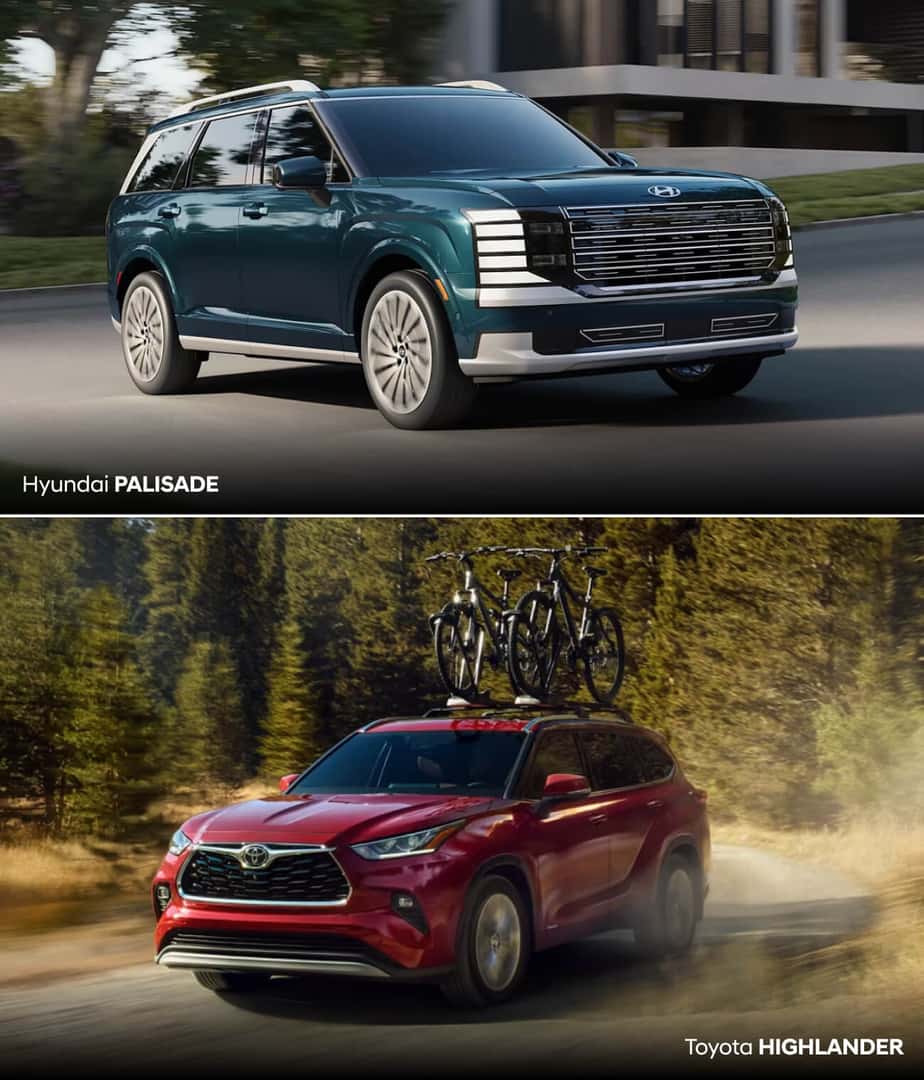
As we compare 2026 Hyundai Palisade competitors, the first vehicle we’ll discuss is the Toyota Highlander. This three-row midsize SUV from Toyota is spacious and stylish, to be sure, but it falls short of the Hyundai Palisade in a few key areas. The Hyundai SUV boasts a robust 3.5-liter six-cylinder engine that produces 287 horsepower and 260 pound-feet of torque, allowing the vehicle to tow up to 5,000 pounds when properly equipped.
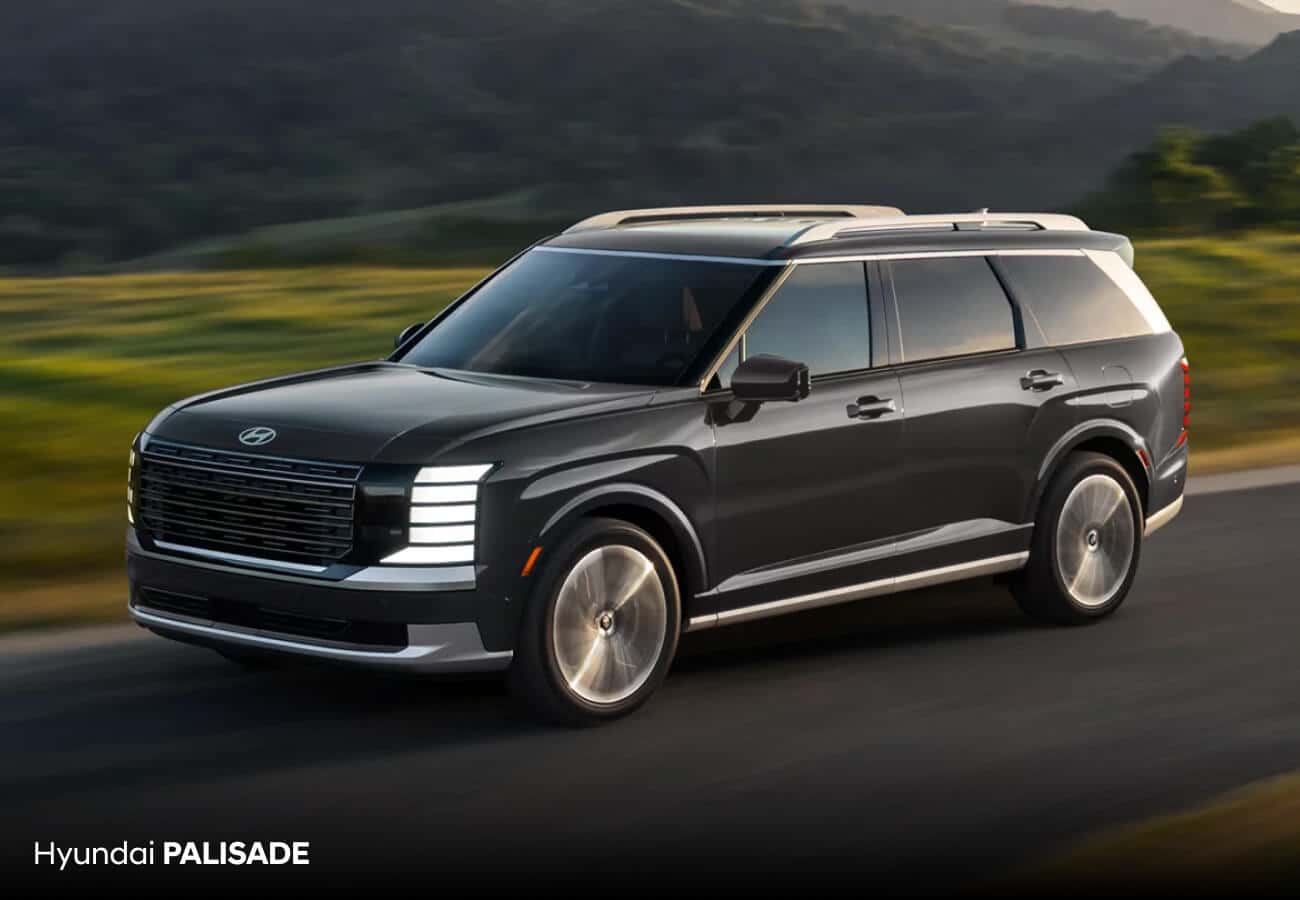
The Palisade is also available as a hybrid – an all-new option for 2026. This fuel-conscious alternative also delivers a significant output boost. It’s fitted with a 2.5-liter inline-four-cylinder turbo hybrid engine that pumps out 329 horsepower and 339 pound-feet of torque. You can pull up to 4,000 pounds1 behind this mild hybrid. The best part, though, is that it gives you all of this strength and responsiveness while still earning up to an EPA-estimated 33/35/34 MPG (City/Highway/Combined).2
The Toyota Highlander is also available with two powertrains. Gas models feature a 2.4-liter turbocharged four-cylinder engine that outputs 265 horsepower, falling short of the 2026 Palisade. While the new Highlander does produce slightly more torque than the Hyundai SUV, it’s not enough to give it a towing advantage – both SUVs have a 5,000-pound maximum towing capacity.1,3 All things considered, strength is more or less a tie for the gas-only Palisade and Highlander sport-utes, but how do their hybrid versions stack up?
If you’re looking for electrified efficiency that doesn’t compromise on performance, you’re about to see why the Toyota Highlander can’t keep pace with the Palisade Hybrid. Highlander Hybrid models are fitted with a 2.5-liter four-cylinder hybrid powertrain, though you won’t find a turbocharger like you will with the Hyundai SUV. The result is 243 combined horsepower. Toyota doesn’t generally publish combined torque for their hybrid models, so all we know is that the Highlander Hybrid makes 175 pound-feet of torque from its engine alone.
With its non-turbo hybrid powertrain, the Toyota Highlander achieves nearly identical fuel ratings, at up to an EPA-estimated 35/35/35 MPG (City/Highway/Combined).4 However, its output is significantly lower, resulting in a weaker towing maximum of 3,500 pounds.3 All in all, lower horsepower, presumably torque, and towing strength simply aren’t worth the marginal increase in fuel economy when comparing the Hyundai Palisade vs. Toyota Highlander.
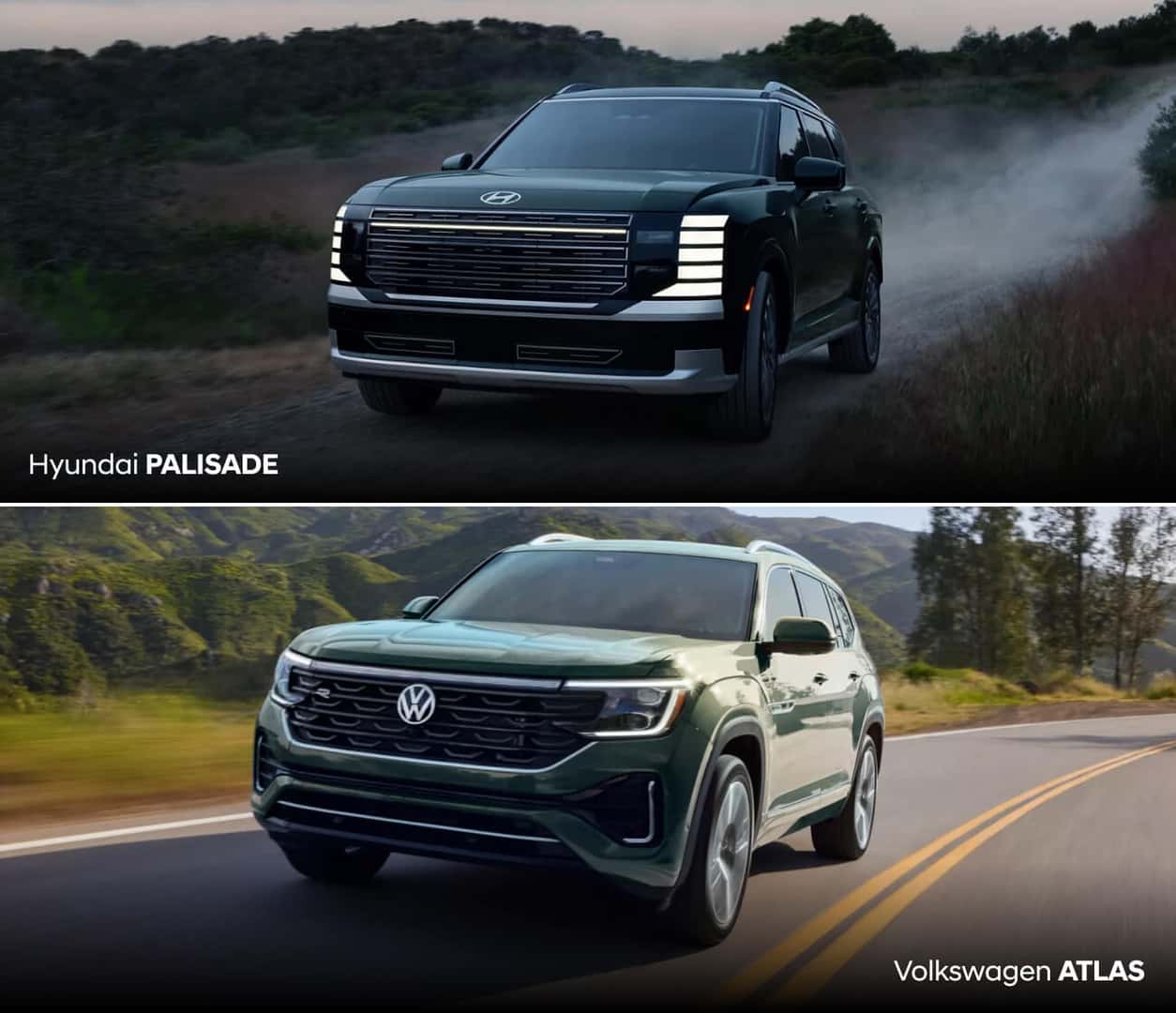
The Volkswagen Atlas is powered by a turbocharged 2.0-liter four-cylinder engine that makes 269 horsepower and 273 pound-feet of torque. While the torque rating is slightly higher than the Hyundai Palisade, you’ll feel more difference in the comparative lack of horsepower. The VW Atlas can also tow 5,000 pounds when properly equipped, but it does not have the hearty growl of a V-6 under the hood.
There are two key differences in a Hyundai Palisade vs. Volkswagen Atlas comparison that – we think – are the catalyst for the Hyundai model being the better choice. First up is the number of people each automobile can hold. The Palisade has seating for seven or eight occupants, depending on the trim and configuration, whereas the VW Atlas cannot seat more than seven. Odds are that you need all the seating you can get if you’re looking at a three-row SUV, whether for your own growing family or for carpool days.
The second difference is that the Atlas currently isn’t available with a hybrid powertrain, meaning you won’t find the same level of power or efficiency.
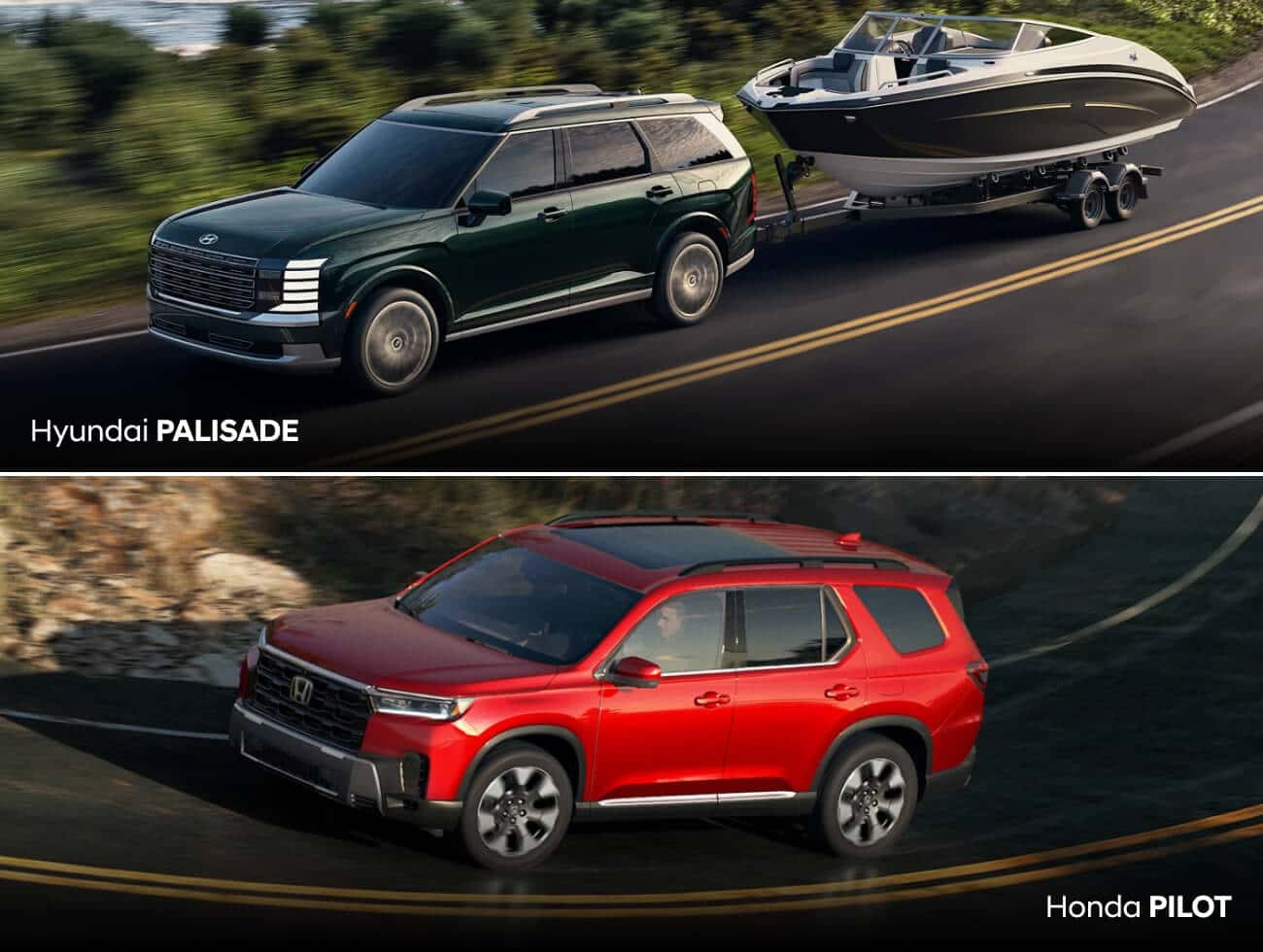
The Honda Pilot, unlike our other two 2026 Hyundai Palisade competitors, comes with a V-6 engine. It makes 285 horsepower, which comes closer to the Hyundai Palisade than the first two competitors. However, we don’t think the Honda SUV looks nearly as good on the road as Hyundai Palisade with its updated, boxy design with eye-catching details, such as the vertical LED headlights. Its cabin also leaves much to be desired, especially in standard form.
For instance, while Honda representatives cite “higher quality materials” for the 2026 Pilot, Hyundai Palisade designers took the time to revamp their SUV’s interior with “premium materials inspired by luxury home furnishings.” Additionally, the comfort-focused, double-door center console and side armrests have been tailored to be ergonomically supportive while reaching for infotainment and vehicle controls.
The new Hyundai Palisade offers a superb blend of features, style, and performance to motorists of many stripes. When pitted against some of its main opponents, the Palisade finds a way to be a cut above the rest. Whether you’re in the market for a new daily driver for your commutes in Wentzville, MO, or a sleek weekend adventure car, this SUV is a great option for you and your loved ones.
Our dealership proudly offers the full range of new Hyundai cars for sale. Please visit us today to take the 2026 Hyundai Palisade – or any of its siblings – for a test drive.
1Towing capability varies by configuration. See the towing guide in the Owner’s Manual for proper use and additional information.
2All figures are EPA estimates and for comparison purposes only. Actual mileage may vary with options, driving conditions, driving habits and vehicle’s condition.
3Before towing, confirm your vehicle and trailer are compatible, hooked up and loaded properly and that you have any necessary additional equipment. Do not exceed any Weight Ratings and follow all instructions in your Owner’s Manual. The maximum you can tow depends on base curb weight plus the total weight of any cargo, occupants, and added vehicle equipment. “Added vehicle equipment” includes additional standard/optional equipment and accessories added by the manufacturer, dealers, and/or vehicle owners. The only way to be certain of your vehicle’s exact curb weight is to weigh your vehicle without passengers or cargo. (Calculated with the new SAE J2807 method.) Installation of a tow hitch receiver or other accessories located near the rear bumper or side-door kick sensors may require disabling or removing the kick sensor, and the sensor operation setting in your vehicle should be turned off. See Owner’s Manual for limitations.
4Use for comparison purposes only. Your mileage will vary for many reasons, including your vehicle’s condition and how/where you drive. See www.fueleconomy.gov.